The ESWG was founded after the ISFH meeting 23-27 September 1979 in London
Click a topic to jump to its section
Membership of the English Speaking Working Group (ESWG) is open to all English speaking members of the ISFG and may be obtained by application to the secretary of the group. There will be no membership fee in addition to that payable to the ISFG.
To apply for membership, please complete this form and send it to the Secretary, Denise Syndercombe Court (denise.syndercombe-court@kcl.ac.uk), using the subject line as described in the form.
For many years, the ESWG has organized an annual proficiency testing programme with a special focus on relationship testing, including both wet testing and paper challenges. The programme is held once a year; in the most recent round, around 60 laboratories participated. It currently consists of three parts:
The registration deadline is normally in April. For further information or to sign up, please contact the head organizer Daniel Kling (daniel.kling@rmv.se).
The 2027 ESWG Scientific Meeting will be held in Sweden in May 2027.
In connection with the ISFG Congress in Montréal, Canada, in August 2026, the ESWG Member meeting was held. Approximately 50 members attended.
In brief, the Board was re-elected for another two-year term. ESWG's financial position is healthy and a discussion was held on how part of the funds could be used. The Board was tasked with taking the proposals from the discussion forward. A new membership application procedure was presented and approved. To apply for ESWG membership, applicants must complete an application form and submit it to the Secretary. This also applies to current members, who must reapply for membership (see details at our webpage). Daniel Kling presented a summary of the progress of the ESWG proficiency testing workshop. Lastly, a proposal was put forward by the Department of Forensic Genetics, National Board of Forensic Medicine, Sweden, to host the 2027 ESWG Scientific Meeting. The proposal was approved, and the meeting will be held in Linköping, Sweden, in May 2027.
19th - 20th May
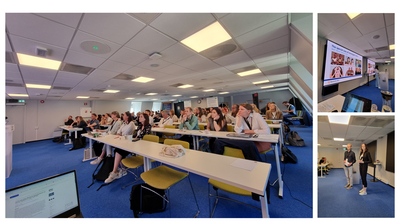
The 2025 scientific meeting of the English Speaking Working Group, organized by the Department of Forensic Sciences, Norway, took place in Oslo, Norway, from May 19 to 20. It was an engaging meeting with around 70 participants and 25 scientific presentations covering topics such as forensic investigative genetic genealogy (FIGG), kinship analysis using SNP panels, epigenetic age prediction models, ancient DNA studies, and ethical considerations in donor conception. Adam Staadig from Sweden received the award for best presentation, which focused on experiences from the implementation of a SNP panel in casework. We thank Marguerethe Stenersen and colleagues for organizing this successful meeting!
15th - 16th May
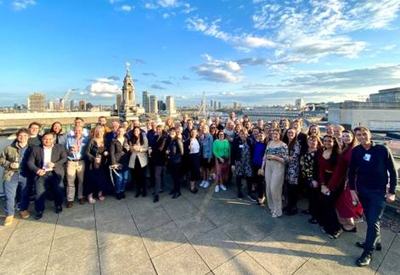
The meeting was hosted by Denise Syndercombe-Court and colleagues at King’s Forensics at King's College of London. There were around 70 participants and 18 presentations covering various topics related to DNA analysis, genetics and kinship (such as biostatistics, SNP marker panels for kinship testing, investigative genetic genealogy, case reports, etc).
Syndercombe Court D, Lincoln P
pp. 683-5
DOI: 10.1007/978-3-642-80029-0_212Bjerre A, Syndercombe Court D, Lincoln P, Morling N
Volume 90
DOI: 10.1016/S0379-0738(97)00143-6Hallenberg C, Morling N
Volume 116
DOI: 10.1016/S0379-0738(00)00351-0Hallenberg C, Morling N
Volume 129
DOI: 10.1016/S0379-0738(02)00208-6Thomsen AR, Hallenberg C, Simonsen BT, Langkjær RB, Morling N
Volume 3
DOI: 10.1016/j.fsigen.2009.01.016Poulsen L, Friis SL, Hallenberg C, Simonsen BT, Morling N
Volume 9
DOI: 10.1016/j.fsigen.2013.06.004
A board administers the ESWG that is responsible for organising any meeting of the group. The board consists of the chairman, the secretary and the treasurer who are elected by vote for a period of two years. The board represents the working group.
Andreas Tillmar
National Board of Forensic Medicine Dept.of Forensic Genetics
Artilleriegatan 12 58758 Linköping Sweden
Dr. Denise Syndercombe Court
Department of Forensic and Analytical Science King's College London
Franklin-Wilkins Building 150 Stamford Street Waterloo SE1 9NH London United Kingdom
Dr. Bo Thisted Simonsen
Section of Forensic Genetics
Frederik V's Vej 11 2100 Copenhagen Denmark